New writing every week
Blood markers, decoded.
Plain-language explainers, deep dives, and how-to guides on lab reports and the metrics that actually matter.

Blood Test MarkersNutritional DeficiencyHealth Tracking
What does low vitamin D mean? — A plain-English guide
Low vitamin D usually means your body's stores of the sunshine vitamin have dipped — common in winter and indoors. Here's what the marker measures and what a low reading does and doesn't mean.
4 min read
More articles
View all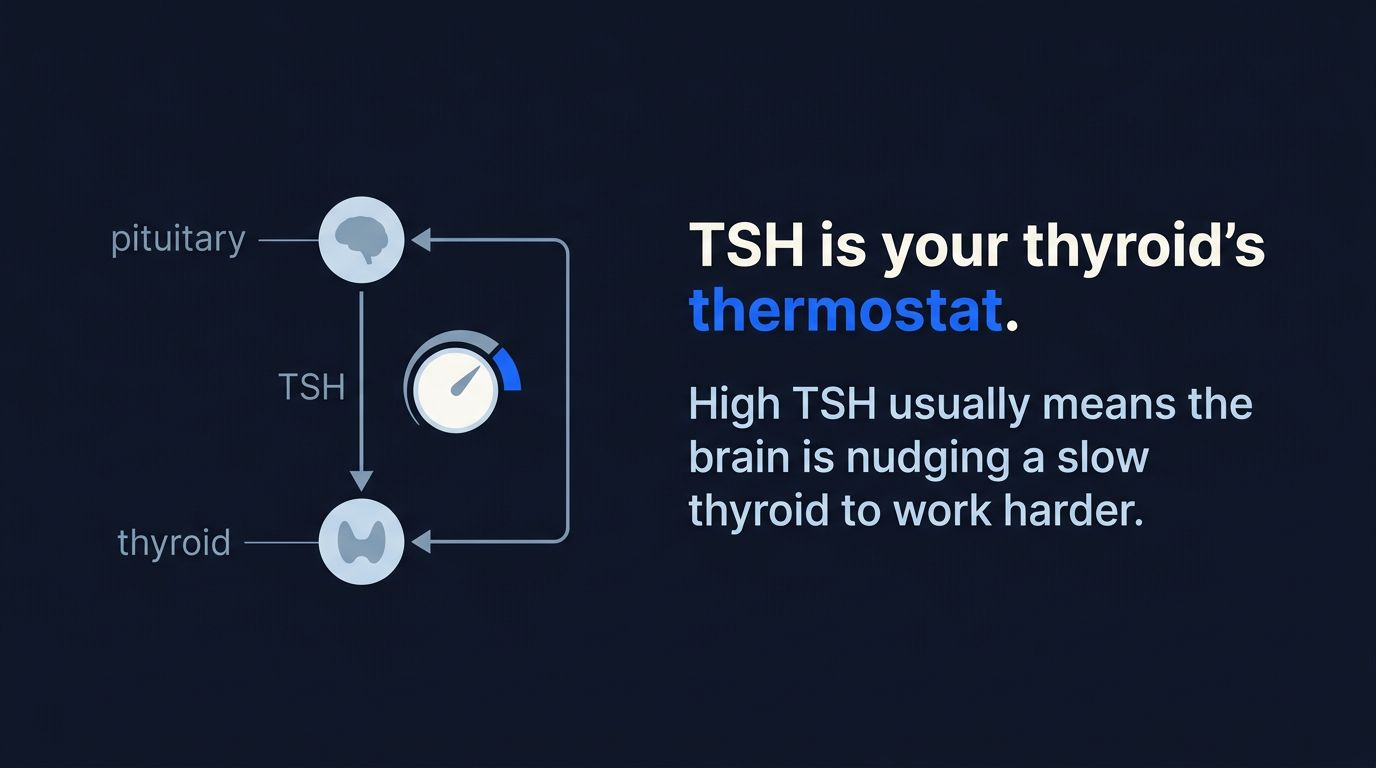 Thyroid HealthHypothyroidism
What does high TSH mean? — A plain-English guide
High TSH usually means your brain is nudging your thyroid to work harder. Here's what the marker measures, why it matters, and what to do next.
4 min read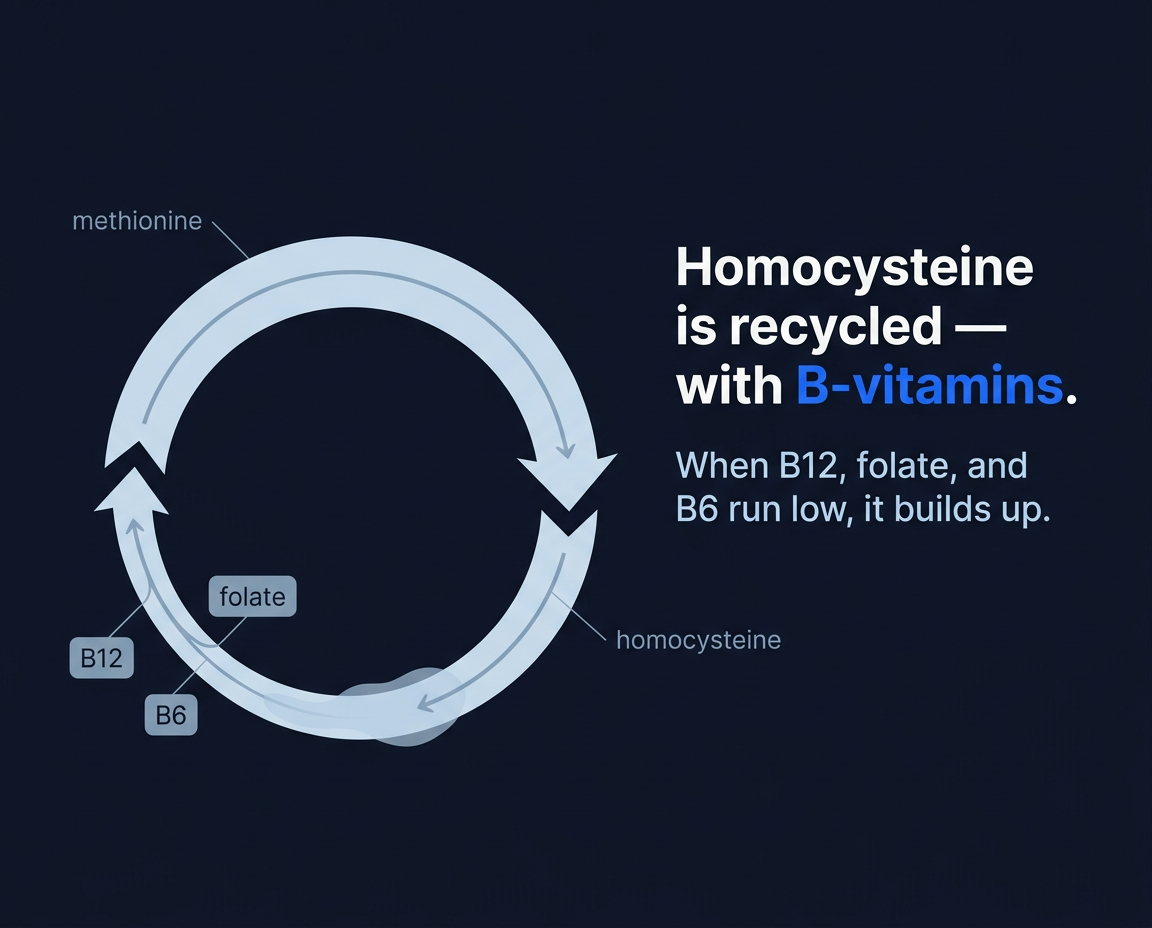 Cardiovascular HealthBlood Test Markers
What does high homocysteine mean?
A high homocysteine means more of this amino acid is building up in your blood than your body usually keeps around. Most of the time that happens because the B-vitamins that normally recycle it — B12, folate, and B6 — are running low. On its own it doesn't diagnose anything. It's one signal that, read in context, can flag a B-vitamin gap or add a little color to your cardiovascular picture. That's exactly why it's worth understanding rather than fearing.
4 min read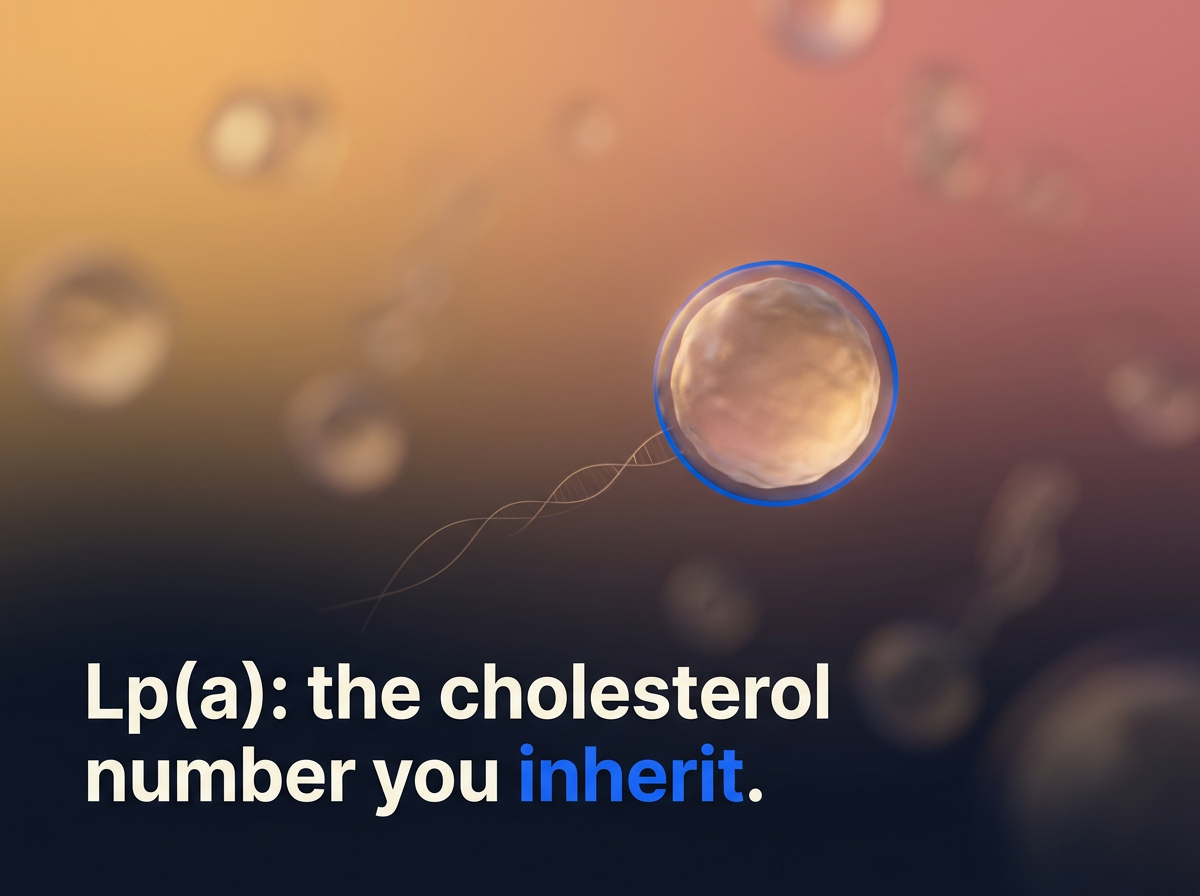
What does high Lp(a) mean?
A high Lp(a) — said "L-P-little-a" — means you carry more of a particular cholesterol-carrying particle than most people. It's a number a standard cholesterol panel often skips, and it's set mostly by the genes you were born with. On its own it doesn't diagnose anything. It's one inherited signal that, in context, can add to cardiovascular risk — which is exactly why it's worth understanding rather than fearing.
3 min read ALTBlood Test Markers
What does high AST mean?
A high AST means there's more of an enzyme called aspartate aminotransferase in your blood than usual — often because some of the cells that hold it have released it. Those cells live in your liver, but also in your muscles, your heart, and your red blood cells. It's a common and usually mild finding, and on its own it rarely tells the whole story. What it means depends on how high it is, what's sitting next to it on the panel, and where it's been heading over time.
7 min read B12 DeficiencyVitamin B12
What does low B12 mean?
Low B12 means your body doesn't have enough vitamin B12 — also called **cobalamin** — circulating to keep up with what your cells need it for. That's a long list: making red blood cells, copying DNA, and maintaining the myelin sheath that wraps your nerves so signals travel cleanly. When B12 runs low, those processes get sloppy. You feel it before the bloodwork shows it.
6 min read- FerritinIron deficiency
What does ferritin mean? — A plain-English guide to your iron storage marker
Ferritin is your body's iron savings account. When it's low, you can feel tired before standard anemia shows up on a blood test. When it's high, the reading often points to inflammation rather than "too much iron." The number on its own rarely tells the full story — your trend over time and the rest of your panel matter more. This is one of those markers your doctor probably mentions in passing and doesn't have the appointment minutes to fully explain. Here's the longer version.
5 min read About Bllod — The home for your blood tests
Bllod turns your lab PDFs into a clear, tracked, plain-English picture of your bloodwork over time. Here's what we are, who we serve, and what we won't do.
4 min read